A basic home contrast therapy setup, meaning a sauna and a cold plunge on the same property, typically runs $8,000 to $16,000 all-in once both units, electrical work, and site prep are counted, though a beginner rarely needs to spend it all at once. Building in phases, one side first and the other within a year, spreads that number out and lets you confirm the routine actually sticks before committing to the second half. Here’s what each piece of the total actually costs and where the real savings are.
Cost Piece 1: The Cold Plunge Side
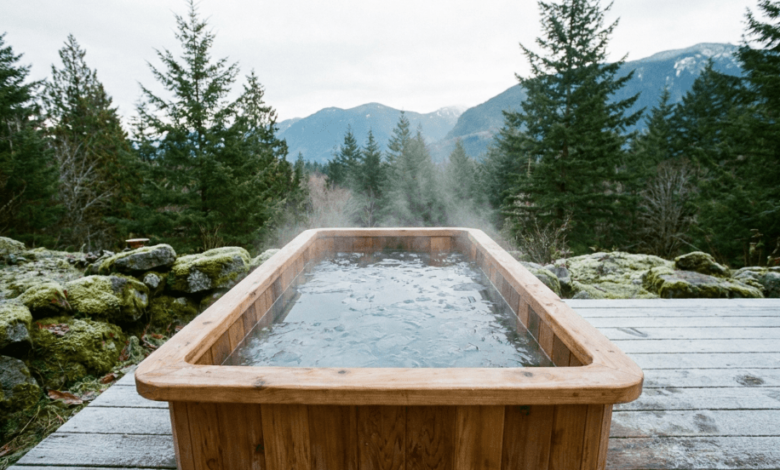
A single-person cold plunge with a matched chiller commonly runs $2,000 to $4,200 before installation, depending on shell material and chiller capacity. Add filtration, an ozone generator or UV-C system paired with a basic cartridge filter, and figure another $300 to $700 if it isn’t already bundled into the base price. This side of the build is usually the smaller of the two upfront costs, but it carries the more consistent ongoing electricity draw since the chiller runs to hold temperature continuously rather than only during active sessions.
Cost Piece 2: The Heat Side
An outdoor barrel or cabin sauna with an electric heater typically lands at $3,500 to $7,500 for the structure and heater together, with price climbing based on cedar thickness, insulation, and window area. A wood-fired option changes this math: no heater electrical draw, but a chimney installation and fire-rated flashing commonly add $2,000 to $3,500 on top of the structure itself. Most first-time buyers pairing a sauna with a cold plunge choose electric heat specifically because an electrician is already coming out for the chiller circuit, which leads into the next cost piece.
Cost Piece 3: Electrical Work for Both Pieces
This is where combining the two purchases actually saves money. A chiller alone typically needs a dedicated circuit pulling 15 to 20 amps, and a mid-size electric sauna heater commonly needs its own 30 to 50 amp circuit. Handled as two separate projects on two separate visits, expect $600 to $1,800 total in electrician labor. Scheduling both circuits during the same visit, after a single load calculation on your panel, often brings that combined number down by a few hundred dollars and avoids a second inspection appointment. If the combined load reveals your panel doesn’t have spare capacity, a subpanel typically adds $1,200 to $2,500, which is worth knowing before either unit ships.
Cost Piece 4: Site Prep and Placement
Both a sauna and a cold plunge need a level, load-rated surface, and placing them close together on a shared deck or pad can reduce total site prep cost compared with building two separate foundations in different parts of the yard. A poured concrete pad or built deck frame sized for both pieces commonly runs $1,500 to $3,500 depending on size and whether it’s contracted out, against roughly double that if the two structures end up on opposite sides of the property with separate prep work for each.
Cost Piece 5: What It Costs to Run Both Monthly
Once installed, expect roughly 15 to 40 dollars a month in electricity for regular sauna use and another 18 to 55 dollars for the chiller holding the plunge at temperature, plus 8 to 25 dollars a month in water treatment supplies for the cold side. None of these numbers are large individually, but a beginner budgeting only for the upfront purchase often forgets to plan for the combined 40 to 120 dollars a month in ongoing cost once both pieces are actually running side by side.
What the Evidence Actually Says About Combining Heat and Cold
It’s worth knowing, before spending on both, that the strongest research doesn’t study sauna and cold plunge together as one combined protocol. Sauna bathing has its own separately documented associations with cardiovascular outcomes in large cohort studies, while cold-water immersion research is a distinct body of evidence: a 2025 systematic review and meta-analysis in PLoS One found modest support for mood and perceived-fatigue benefits, a 2023 meta-analysis in Frontiers in Physiology found modest support for post-exercise recovery, and a 2012 Cochrane review on cold-water immersion for muscle soreness found the evidence limited and of low quality overall. Combining the two is a reasonable assumption that the separate benefits carry over together, not something a trial has specifically measured against either exposure alone, and it’s honest to know that going in rather than expecting a documented multiplier effect.
Where Budgets Actually Overrun
The two most common places a contrast therapy budget runs over aren’t the units themselves, they’re the electrical and site-prep pieces that get estimated rather than quoted. A panel that looked like it had spare capacity on paper sometimes needs a subpanel once an electrician runs the actual load calculation for both circuits together, adding $1,200 to $2,500 that wasn’t in the original plan. A yard that looks flat enough for a shared pad sometimes needs grading or drainage work once a contractor actually measures it, adding another few hundred dollars beyond the base site-prep estimate. Getting firm quotes for both pieces before ordering either unit, rather than budgeting off rough online estimates, is the single best way to avoid a mid-project surprise.
Budgeting a Phased Build for Beginners
Most beginners are better served financially by building one side first, most commonly the sauna since it has a lower ongoing electricity cost, and adding the cold plunge within the following year once the sauna routine feels established rather than optional. That approach also means a smaller initial electrical job, since the second circuit can be planned once the panel’s actual spare capacity after the first installation is already known rather than estimated in advance. Shoppers comparing pricing on the cold plunge side specifically, once ready to add it, can look at SweatDecks alongside other specialty retailers to see how tub-and-chiller bundles compare against buying the pieces separately.
Frequently Asked Questions
What does a full home contrast therapy setup cost? A basic outdoor sauna paired with a single-person cold plunge typically runs $8,000 to $16,000 once units, electrical work, and site prep are all counted, though phasing the build spreads that cost out.
Is it cheaper to buy a sauna and cold plunge together or separately? Individually priced units add up to roughly the same total either way, but scheduling electrical work for both in a single visit is usually the biggest realistic savings available to a beginner.
Does research support combining sauna heat with a cold plunge? The strongest research studies sauna bathing and cold-water immersion separately rather than as a combined protocol, so the benefits of each are documented individually, not as a proven combined multiplier.
Should a beginner build both at once or start with one? Starting with one, most often the sauna, and adding the cold plunge once the routine feels established is a common and financially easier path than building both at once.
References
- Effects of cold-water immersion on health and wellbeing: A systematic review and meta-analysis, PLoS One, 2025
- Effects of cold water immersion after exercise on fatigue recovery and exercise performance: meta analysis, Frontiers in Physiology, 2023
- Cold-water immersion (cryotherapy) for preventing and treating muscle soreness after exercise, Cochrane Database of Systematic Reviews, 2012