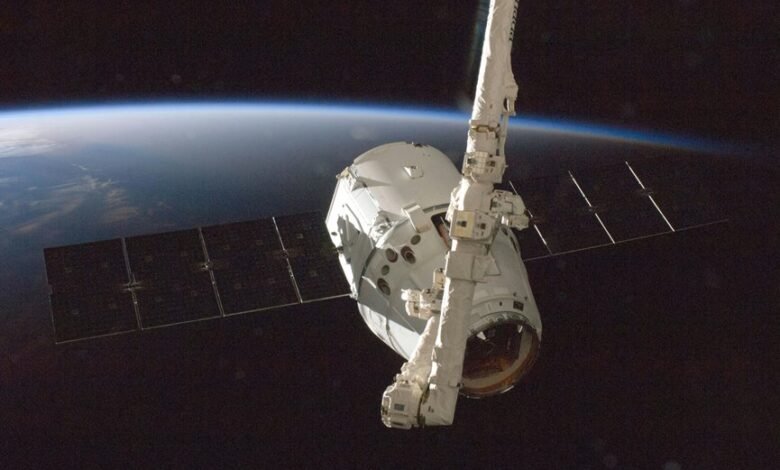
Hypernova Flow 920000212 Strategic Orbit represents a significant development in astrophysical research. This initiative focuses on the mechanics of hypernova events and their broader cosmic implications. By scrutinizing the explosive behaviors of massive stars, it promises advancements in propulsion technologies and satellite navigation. The potential applications for interstellar missions are noteworthy. However, the full extent of these innovations remains to be fully explored, raising questions about their impact on future space endeavors.
Overview of Hypernova Flow 920000212
Hypernova Flow 920000212 represents a significant advancement in astrophysical research and modeling.
This framework rigorously analyzes hypernova characteristics, detailing the explosive phenomena that result from massive stellar collapses.
Technological Innovations in Propulsion
As advancements in propulsion technology continue to reshape the landscape of space exploration, innovative designs and methodologies are emerging that promise to enhance efficiency and reduce travel times.
The integration of advanced materials facilitates lighter, stronger components, while cutting-edge propulsion systems optimize energy efficiency.
These developments not only advance mission capabilities but also align with the growing demand for sustainable and cost-effective space travel solutions.
Enhancing Satellite Positioning and Navigation
Recent advancements in propulsion technology have created a ripple effect across various domains of space exploration, including satellite positioning and navigation.
Enhanced propulsion systems allow for improved satellite accuracy, refining navigation systems to provide more reliable data. This increased precision is crucial for applications requiring real-time positioning, enabling greater operational freedom and efficiency in both civilian and military contexts.
Future Implications for Interstellar Missions
While advancements in propulsion technology hold significant promise for satellite navigation, their implications extend far beyond Earth, particularly for interstellar missions.
Enhanced propulsion systems enable unprecedented interstellar travel capabilities, facilitating more ambitious cosmic exploration.
These developments may allow humanity to reach distant star systems, assess extraterrestrial environments, and expand its understanding of the universe, ultimately reshaping the future of space exploration.
Conclusion
In conclusion, Hypernova Flow 920000212 represents a quantum leap in our comprehension of hypernova phenomena, akin to unlocking a cosmic treasure chest. Its advancements in propulsion technology and satellite navigation herald a new era of interstellar exploration. The insights gleaned from this framework not only refine our understanding of stellar evolution but also pave the way for future missions, positioning humanity to navigate the vast tapestry of the universe with unprecedented precision and confidence.